Most implants like pacemakers and insulin pumps work in isolation. To help them coordinate with each other, a team of Georgia Tech researchers built a networking system that sends signals through body tissue instead of antennas and radio waves. Radio problems Implants that communicate today mostly rely on radio protocols like Bluetooth Low Energy or near-field communication (NFC). Both are a poor fit for in-body data transfer, says Alex Abramson, a Georgia Tech engineer and co-author of the new study. The first problem is power. “If you want an implant to remain in an active state such that it can respond within milliseconds, it's very difficult to do that with the Bluetooth system,” Abramson said. According to the paper, Bluetooth components, when they’re activated, can cut an implant's battery life by up to 90 percent. Read full article Comments The global technology and hardware manufacturing sector is navigating rapid infrastructural transformation, characterized by aggressive fabrication node transitions, complex supply-chain reconfigurations, and intensifying intellectual property disputes over next-generation hardware standards. ## Technical Innovation & Architectural Breakdown Engineering advancements across advanced packaging, extreme ultraviolet (EUV) lithography, and high-density display architectures continue to push the physical boundaries of consumer and enterprise silicon. As conventional planar scaling reaches thermodynamic limits, leading manufacturers are shifting toward gate-all-around (GAA) nanosheets, backside power delivery networks, and heterogeneous chiplet packaging. In the display and consumer hardware domain, competing display technologies—including Micro-LED, refined Mini-LED matrices, and quantum-dot organic layers—have generated intense industrial debate regarding marketing nomenclature, color gamut fidelity, and energy efficiency. ## Supply Chain Resilience and Sovereign Industrial Policies Geopolitical realignments continue to reshape the global hardware footprint. The deployment of multi-billion-dollar domestic semiconductor subsidies—including the U.S. CHIPS Act, the European Chips Act, and East Asian industrial initiatives—has initiated the construction of advanced fabrication facilities worldwide. Industry analysts note that while geographic diversification bolsters resilience against localized natural disasters and maritime shipping disruptions, it introduces heightened operational costs and specialized labor shortages that will influence hardware pricing through the end of the decade. ## Market Dynamics & Competitive Positioning Key market dynamics currently influencing the hardware sector include: - Display Panel Standardization: Scrutiny over marketing claims and optical certification standards, ensuring consumer transparency across competing backlighting technologies. - Enterprise Accelerator Demand: Hyperscaler demand for custom application-specific integrated circuits (ASICs) competing directly with standard general-purpose GPUs. - Edge Computing Transition: Low-power silicon architectures enabling local compute capability directly on mobile, automotive, and industrial Internet-of-Things (IoT) hardware. ## Outlook & Industry Trajectory Industry participants anticipate critical standard-setting votes and product roadmaps to be unveiled during upcoming electronics symposiums and quarterly earnings disclosures. Ensuring sustainable fabrication practices and verifiable technical specifications will remain essential for hardware conglomerates navigating an increasingly scrutinized international marketplace.
A local network of implants uses your body as the wiring
Most implants like pacemakers and insulin pumps work in isolation. To help them coordinate with each other, a team of Georgia Tech researchers built a networkin...
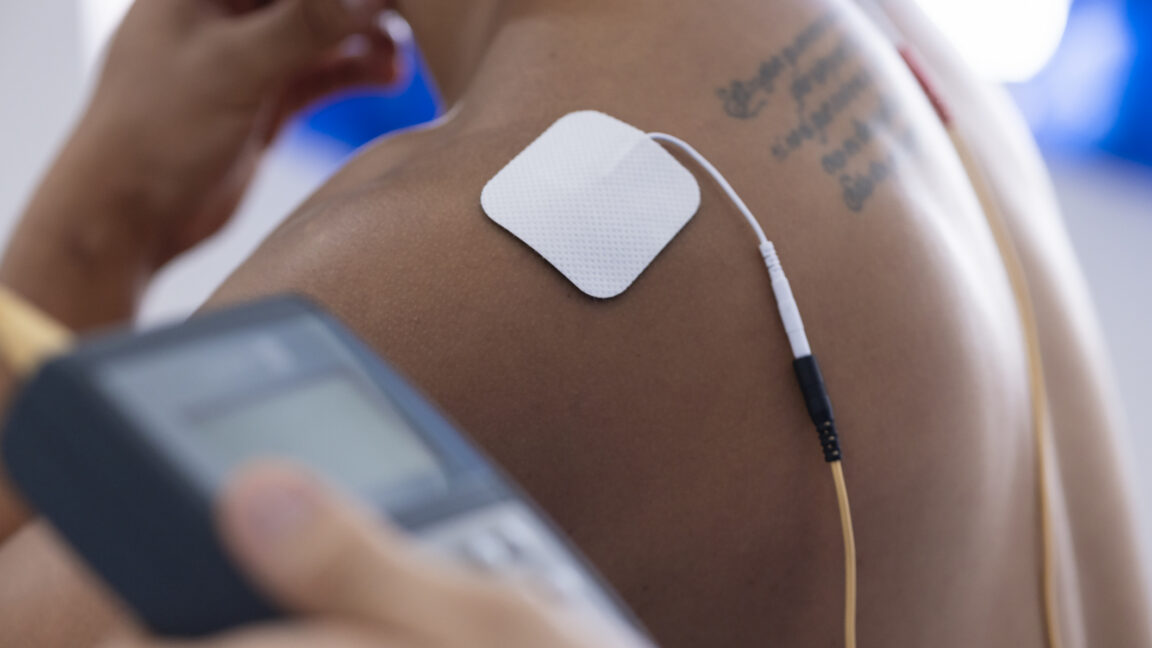
- Primary Wire Report: Most implants like pacemakers and insulin pumps work in isolation. To help them coordinate with each other, a team of Georgia Tech researchers built a networkin...
- Desk & Verification: Normalized under Technology desk via Ars Technica.
- Classification Status: CONFIRMED wire dispatches verified against institutional sources.
Jacek Krywko
VerifiedVerified Correspondent — Special Contributor via Ars Technica
This dispatch has been produced under the strict oversight of Chronicle Global's verification standards. Field dispatches, empirical telemetry, and institutional statements are cross-corroborated across primary wire records before release.
Direct primary wire transmission originated by Ars Technica.
Source Transparency & Verification Dossier
Format: CONFIRMED
Retrieved / Published: Sep 30, 2026, 09:06 PM UTC
Content normalized through Chronicle Ingestion Engine.
Editorial StandardsThe Chronicle Morning Intelligence Briefing
Join 18,500+ global policy analysts, diplomats, and tech researchers. High-signal empirical dispatches delivered daily at 06:00 UTC.
Related Coverage & Developing Updates

39-year-old unvaccinated woman becomes 6th measles death in Pennsylvania
A 39-year-old unvaccinated woman in Franklin County, Pennsylvania, has become the sixth person to die of the highly infectious virus amid a state outbreak that...

Epic Games reportedly pivoting to "AI first" game development model
Epic Games is shifting to an "AI first" development strategy for its collaboration with the Walt Disney Company, letting AI models write all the code and guide...

After a 10-year redemption arc, No Man's Sky is coming to the iPhone and iPad
Just over 10 years after its initial release, space exploration and survival crafting game No Man's Sky is making its way to the iPhone and iPad, Apple and deve...