Writing about quantum entanglement is always a challenge. There are so many clichés to avoid: It’s mysterious, ghostly, spooky, and weird. Entanglement is none of those things, and yet it is also all of those things—a superposition of clichés, you might say. So, having gotten all of my clichés out of the way in the second sentence, let’s take a look at how a group of researchers managed to entangle a light beam with a glass bead , which is, frankly, quite an achievement. Cliché-free entanglement Quantum entanglement is nothing more or less than the idea that if two objects are linked, then their behavior will, in some ways, be correlated. To take a terrible example: My upper and lower arm are very strongly correlated in terms of relative position because they are connected at the elbow. No one is surprised by this because we can see that they are actually a single object called an arm. Two photons can be, in a sense, joined together, meaning that they have correlations, too. In this case, we are (naively) surprised for three reasons. First, we think of photons as separate objects that cannot be joined—this is a mistake of understanding. Second, when we connect two photons, we only connect them in limited ways: The two photons may be wholly uncorrelated in terms of polarization, but strongly correlated in terms of energy. Read full article Comments The global technology and hardware manufacturing sector is navigating rapid infrastructural transformation, characterized by aggressive fabrication node transitions, complex supply-chain reconfigurations, and intensifying competition over next-generation computing standards.
An experimental tour-de-force: Entanglement between glass bead and light
Writing about quantum entanglement is always a challenge. There are so many clichés to avoid: It’s mysterious, ghostly, spooky, and weird. Entanglement is none...
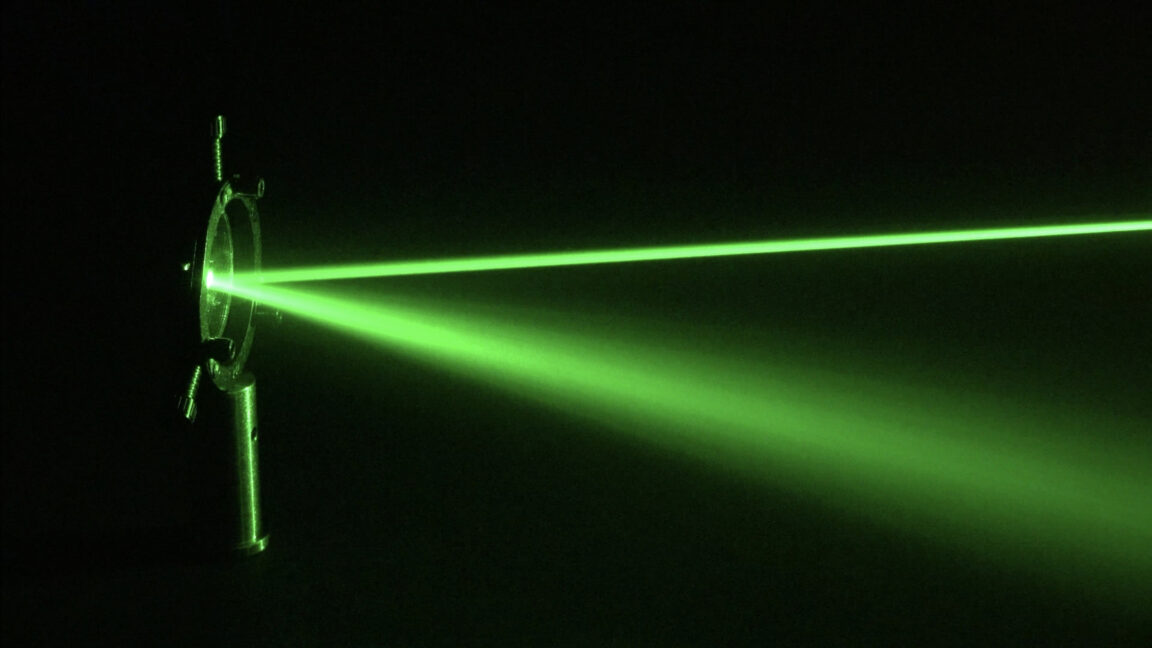
- Primary Wire Report: Writing about quantum entanglement is always a challenge. There are so many clichés to avoid: It’s mysterious, ghostly, spooky, and weird. Entanglement is none...
- Desk & Verification: Normalized under Technology desk via Ars Technica.
- Classification Status: CONFIRMED wire dispatches verified against institutional sources.
Chris Lee
ContributorContributing Reporter via Ars Technica
This article has been aggregated and formatted under Chronicle Global's editorial standards. Primary source reporting is attributed to originating news services and verified against public records.
Direct primary wire transmission originated by Ars Technica.
Source Transparency & Verification Dossier
Format: CONFIRMED
Retrieved / Published: Oct 8, 2026, 06:45 PM UTC
Content normalized through Chronicle Ingestion Engine.
Editorial StandardsThe Chronicle Morning Intelligence Briefing
Join 18,500+ global policy analysts, diplomats, and tech researchers. High-signal empirical dispatches delivered daily at 06:00 UTC.
Related Coverage & Developing Updates

Just 5 years in, interactive chatbot platform Character.AI files for bankruptcy
The startup will sell some of its assets to Disney for $20 million....

Phase Eight and Hobbs owner hit by cyber-attack, as H&M probes separate hack claim
TFG London has apologised to customers for disruption after it identified a "cybersecurity incident" on Sunday....

39-year-old unvaccinated woman becomes 6th measles death in Pennsylvania
A 39-year-old unvaccinated woman in Franklin County, Pennsylvania, has become the sixth person to die of the highly infectious virus amid a state outbreak that...