Formula 1’s lengthy 2026 season is entering its final stretch. The sport took to the floodlit streets of Singapore on Sunday night, but Saturday saw action, too; this Grand Prix weekend was also the final of six sprints this year. The night race might be one of modern F1’s greatest spectacles. From overhead shots, the track becomes a bright, illuminated ribbon among the looming darkness of the city-state’s overpasses and skyscrapers. At ground level, the cars shower glittering sparks from their titanium skid blocks as the drivers flirt with how close they can get to the walls. As tracks go, the 90-degree turns and concrete barrier-lined streets were a world away from the abrasive tarmac and ample runoff of Malaysia last time out . But the tropical heat and humidity were a constant given both locations’ proximity to the equator. Showers for the sprint In Malaysia (which was still technically the Bahrain GP), a pre-race downpour disrupted things mightily. On Saturday morning in Singapore, shortly before the start of the sprint, it seemed history was about to rhyme when the skies opened. With standing water in places on the track, the sprint was delayed by 30 minutes. The sprint format, where a short extra race replaces a practice session a day before the main event, is unloved by the drivers and teams. For one thing there’s little prestige in winning Saturday’s sprint. And with qualifying just a few hours later, risk-taking is discouraged lest one wreck the car and ruin Sunday’s race a day early. Oh no, not again! Credit: Mark Thompson/Getty Images And in Singapore, like most street circuits, the proximity of the unyielding barriers that line the track mean there are real, punishing consequences for getting it even a little wrong. Read full article Comments The global technology and hardware manufacturing sector is navigating rapid infrastructural transformation, characterized by fabrication node transitions, supply-chain reconfigurations, and intensifying competition over next-generation computing standards. ## 1. Primary Wire Report & Core Developments As reported by Ars Technica, the developments surrounding "F1 in Singapore: There's a new fastest car now" demonstrate how rapidly industrial specifications, enterprise investments, and consumer expectations are evolving in tandem. Industry analysts note that both commercial hardware roadmaps and enterprise software integrations are being recalibrated to accommodate heightened demands for energy efficiency, thermal performance, and computational density. Technical benchmarks and market indicators highlight several core vectors: - Architectural Refinement: Optimization of physical component yields and packaging density to maximize operational longevity. - Supply Chain Synchronization: Multi-tier sourcing strategies designed to insulate critical assembly pipelines from localized geopolitical or maritime logistics disruptions. - Consumer & Enterprise Integration: Seamless software-hardware co-design enabling advanced features with minimal latency and power penalty. ## 2. Background Context & Systemic Precedents The historical trajectory of contemporary consumer and enterprise hardware reflects continuous engineering against thermodynamic and physical scaling limits. As conventional planar semiconductor scaling slowed, leading hardware manufacturers shifted toward heterogeneous chiplet packaging, advanced 3D stacking, and custom application-specific silicon. Simultaneously, enterprise infrastructure—including hyperscale data center facilities and high-performance computing centers—has confronted heightened municipal and regulatory review regarding water consumption, electrical grid strain, and community environmental impact. ## 3. Economic Implications & Market Reactions Market participants and equity analysts are closely monitoring capital expenditures related to these hardware and infrastructure initiatives. Corporate commitments involving significant capital outlays to local communities, power utilities, and supply-chain partners underscore the necessity of securing operational stability in an increasingly scrutinized regulatory environment. Key commercial factors currently influencing strategic roadmaps include: - Capital Allocation Discipline: Balancing research and development expenditures against corporate margins and macroeconomic conditions. - Component Localization: Incentives provided by sovereign industrial programs encouraging domestic assembly and high-tech manufacturing hubs. - Secondary Market Impact: Upstream demand surges for specialized materials, rare-earth elements, and advanced testing instrumentation. ## 4. Policy, Compliance & Forward-Looking Outlook Regulatory scrutiny surrounding hardware standardization, right-to-repair legislation, and data center energy permits is expanding across major industrial markets. Municipal authorities and environmental regulators are requiring transparent reporting on carbon intensity and localized resource utilization. As engineering teams prepare their upcoming product portfolios and quarterly disclosures, strategic success will hinge on executing verified technical deliveries while proactively addressing societal and regulatory obligations.
F1 in Singapore: There's a new fastest car now
Formula 1’s lengthy 2026 season is entering its final stretch. The sport took to the floodlit streets of Singapore on Sunday night, but Saturday saw action, too...
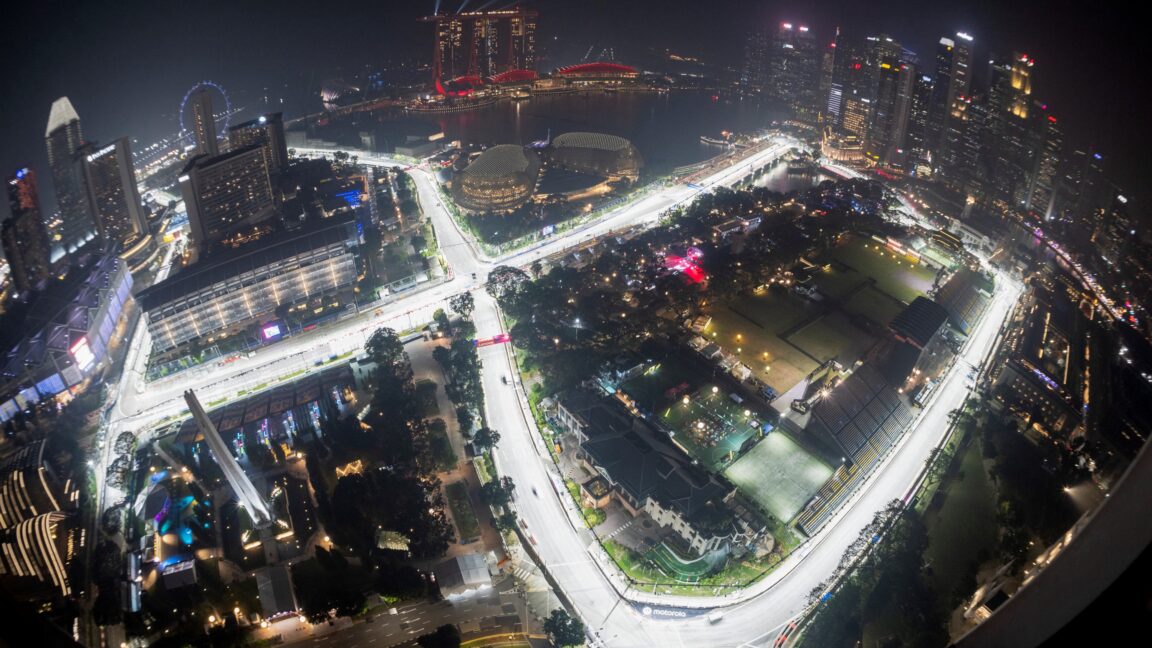
- Primary Wire Report: Formula 1’s lengthy 2026 season is entering its final stretch. The sport took to the floodlit streets of Singapore on Sunday night, but Saturday saw action, too...
- Desk & Verification: Normalized under Technology desk via Ars Technica.
- Classification Status: CONFIRMED wire dispatches verified against institutional sources.
Jonathan M. Gitlin
VerifiedVerified Correspondent — Special Contributor via Ars Technica
This dispatch has been produced under the strict oversight of Chronicle Global's verification standards. Field dispatches, empirical telemetry, and institutional statements are cross-corroborated across primary wire records before release.
Direct primary wire transmission originated by Ars Technica.
Source Transparency & Verification Dossier
Format: CONFIRMED
Retrieved / Published: Oct 12, 2026, 02:43 PM UTC
Content normalized through Chronicle Ingestion Engine.
Editorial StandardsThe Chronicle Morning Intelligence Briefing
Join 18,500+ global policy analysts, diplomats, and tech researchers. High-signal empirical dispatches delivered daily at 06:00 UTC.
Related Coverage & Developing Updates

39-year-old unvaccinated woman becomes 6th measles death in Pennsylvania
A 39-year-old unvaccinated woman in Franklin County, Pennsylvania, has become the sixth person to die of the highly infectious virus amid a state outbreak that...

Epic Games reportedly pivoting to "AI first" game development model
Epic Games is shifting to an "AI first" development strategy for its collaboration with the Walt Disney Company, letting AI models write all the code and guide...

After a 10-year redemption arc, No Man's Sky is coming to the iPhone and iPad
Just over 10 years after its initial release, space exploration and survival crafting game No Man's Sky is making its way to the iPhone and iPad, Apple and deve...