NASA announced its 2025 Astronaut Candidate Class on Sept. 22, 2025, at the agency’s Johnson Space Center in Houston. Credit: NASA/Helen Arase Vargas NASA is looking for the explorers who will help write the next chapter of human spaceflight. Applications are now open for the agency’s next class of astronauts, who will join NASA as America returns to the Moon, builds the Moon Base, and lays the groundwork for the first crewed missions to Mars. The next generation of astronauts will train to operate on the lunar surface, live and work beyond Earth, and take on missions that will push the boundaries of human exploration farther than ever before. U.S. citizens interested in joining the astronaut corps have until 11:59 p.m. EST Thursday, Dec. 3, to submit their completed application materials at: https://go.nasa.gov/3WyvlQi “This is an extraordinary time to join NASA’s astronaut corps,” said NASA Administrator Jared Isaacman. “The people we select could walk on the Moon, live and work at the Moon Base, and help pioneer the systems and operations that will ultimately carry crews to Mars. Those missions will demand technical excellence, sound judgment, teamwork, and courage. NASA’s astronaut corps has always called on remarkable Americans willing to take on extraordinary challenges in service to the nation. If you are ready to join that tradition, come help write the next chapter of humanity’s greatest adventure.” NASA expects to make its final selection in late 2027 to begin training as the next class of astronaut candidates. “The window is open. The mission is waiting. And the only thing missing from the greatest adventure humanity has ever embarked upon is you,” said NASA Deputy Administrator Matt Anderson. The agency last opened applications in 2024. From more than 8,000 applications, 10 astronaut candidates were selected in 2025 and are currently completing nearly two years of training. “For those who apply, becoming a NASA astronaut is more than a career opportunity,” said Scott Tingle, chief astronaut and chair of the Astronaut Selection Board at NASA’s Johnson Space Center in Houston. “It is a chance to join a legacy of explorers who have pushed the boundaries of discovery and play a role in the missions that will shape humanity’s future in space. The next generation of astronaut candidates could help write history while inspiring future scientists, engineers, and explorers.” Since the 1960s, NASA has selected 370 people to train as astronaut candidates for its increasingly challenging missions. The agency has 32 astronauts active in the astronaut corps, and selected applicants will join their ranks to study spacewalking, lunar geology, operations of high-performance aircraft, and more. The basic requirements to apply include United States citizenship and a master’s degree in a STEM field, including engineering, biological science, physical science, or computer science from an accredited institution. The requirement for the master’s degree can also be met by: Completion of at least two years of work toward a doctoral program in an appropriate technical field of engineering, biological science, physical science, computer science, or mathematics. Completion of a Doctor of Medicine, Doctor of Osteopathic Medicine, Physician Assistant, Doctor of Nursing Practice, Family Nurse Practitioner, or a related medical degree. Completion of, or current enrollment in, a nationally recognized Test Pilot School program, provided the program is completed by July 2027. If Test Pilot School is the only advanced technical degree, then completion of a bachelor’s degree in a STEM field, including engineering, biological science, physical science, or computer science is required. Candidates must also have at least three years of related professional experience after completing their qualifying degree. For pilots, the professional experience requirement may be met through the following flight experience: High-performance jet aircraft: 750 hours of pilot-in-command time. Other fixed-wing aircraft: 1,500 total flight hours, including 750 hours as pilot in command. Rotary-wing aircraft: 1,000 total flight hours, including 300 hours as pilot in command. For medical doctors, residency training may count toward the professional experience requirement and must be completed by July 2027. Astronaut candidates must pass NASA’s long-duration astronaut flight physical and demonstrate strong leadership, teamwork, and communication skills. Since its inception, NASA’s astronaut corps has represented the very best of American ingenuity, skill, and determination, carrying out missions that achieve the near impossible, expanding humanity’s understanding of Earth, the Moon, and beyond. As part of a Golden Age of innovation and exploration, NASA will send astronauts on increasingly difficult missions near the lunar South Pole to explore more of the Moon than ever before. In addition to providing economic benefits and advancing scientific discovery through its Artemis missions, NASA will establish an enduring human presence on the lunar surface and build on the agency’s foundation for the first crewed mission to Mars. Learn more about the application process and a career as a NASA astronaut at: go.nasa.gov/astro2026 -end- George Alderman / Cheryl Warner Headquarters, Washington 202-358-1600 george.a.alderman@nasa.gov / cheryl.m.warner@nasa.gov Anna Schneider Johnson Space Center, Houston 281-483-5111 anna.c.schneider@nasa.gov Share Details Last Updated Nov 07, 2026 Editor Jessica Taveau Location NASA Headquarters Related Terms Becoming an Astronaut Astronauts Candidate Astronauts Humans in Space
NASA Seeks Next Generation of Explorers to Join Astronaut Corps
NASA announced its 2025 Astronaut Candidate Class on Sept.
- Primary Wire Report: NASA announced its 2025 Astronaut Candidate Class on Sept.
- Desk & Verification: Normalized under Space & Astronomy desk via NASA Breaking News.
- Classification Status: DEVELOPING wire dispatches verified against institutional sources.
Jessica Taveau
ContributorContributing Reporter via NASA Breaking News
This article has been aggregated and formatted under Chronicle Global's editorial standards. Primary source reporting is attributed to originating news services and verified against public records.
Direct primary wire transmission originated by NASA Breaking News.
Source Transparency & Verification Dossier
Format: DEVELOPING
Retrieved / Published: Nov 7, 2026, 06:11 PM UTC
Content normalized through Chronicle Ingestion Engine.
Editorial StandardsThe Chronicle Morning Intelligence Briefing
Independent global intelligence and primary wire coverage. High-signal empirical dispatches delivered daily at 06:00 UTC.
Related Coverage & Developing Updates
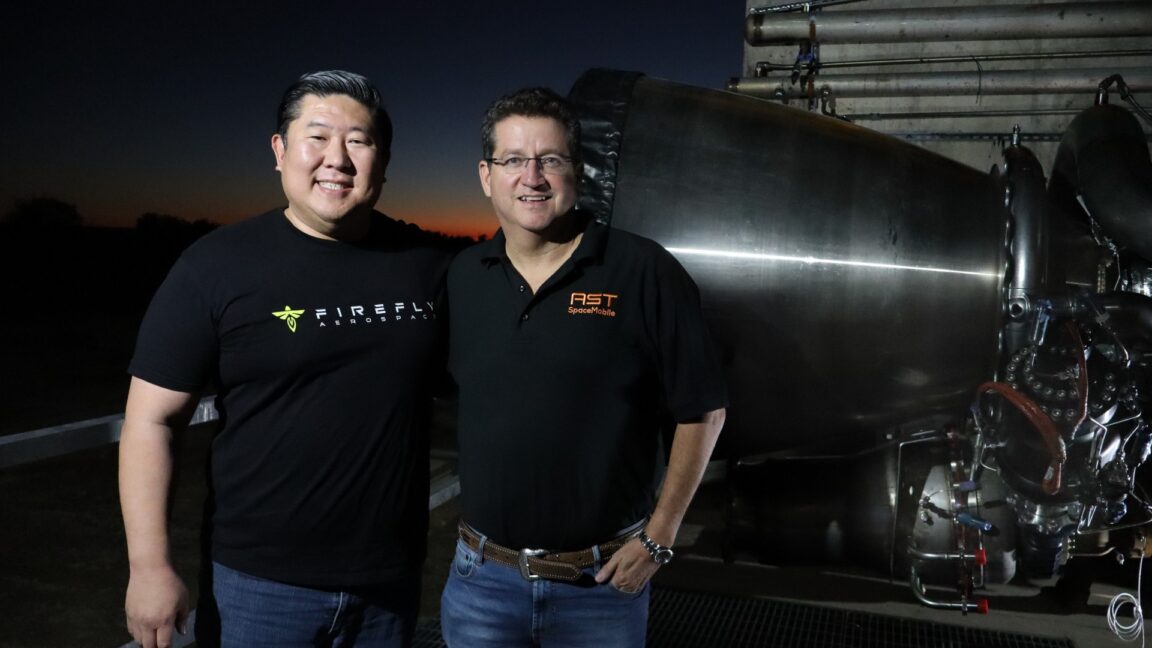
You know the launch market is tough when satellite companies start building rockets
There are optimistic plans for spaceflight, and then there are optimistic plans.
M30’s Sparkling Stars
Sarajedini This NASA/ESA Hubble Space Telescope image released Nov.
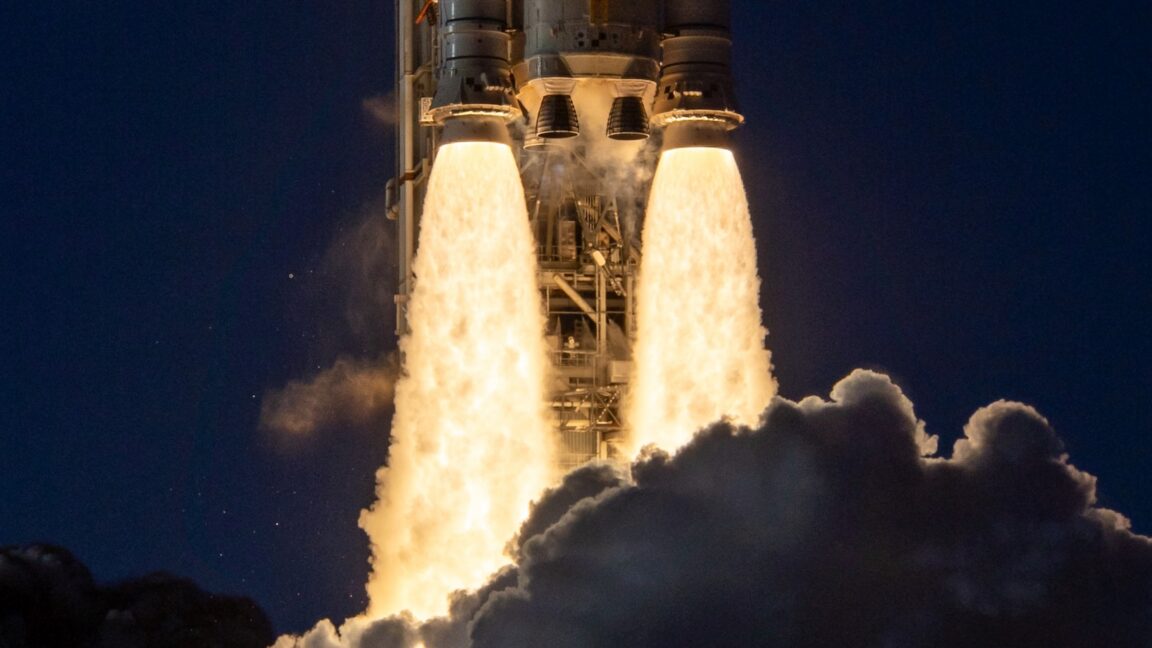
Rocket Report: Artemis II literally tore through the atmosphere; New Glenn delay
Welcome to Edition 9.18 of the Rocket Report!