A protein is a chain of amino acids held together by what are called peptide bonds. On their own, those bonds are extremely stable; they're estimated to have a half-life of several hundred years. But in Earth's environment, most proteins don't last nearly that long. That's because organisms have evolved a handful of ways to catalyze the break-up of peptide bonds, which have diversified into countless specialized protein-digesting enzymes. Proteases are everywhere and generally make short work of any proteins that find their way into the environment. Now, researchers have basically short-circuited the diversification process, using AI-based protein design tools to take the catalytic core of two types of protease and replace the entire rest of the protein. The resulting enzymes could be tuned to cut specific proteins in half, and the researchers demonstrated their effectiveness by using them to cut proteins associated with neurological diseases. Cutting proteins The basic peptide bond isn't especially interesting-looking—it's what you get when you link an amino group to an acid, releasing a water molecule in the process. As their name implies, amino acids have both an amino and an acid group, allowing them to form peptide bonds on two sides of the amino acid. This is critical for building up the long chains found in proteins. (The amino acids also have side chains with distinctive chemistry, which gives a backbone specific properties.) Read full article Comments
Researchers use AI to design proteins that cut up other proteins
A protein is a chain of amino acids held together by what are called peptide bonds. On their own, those bonds are extremely stable; they're estimated to have a...
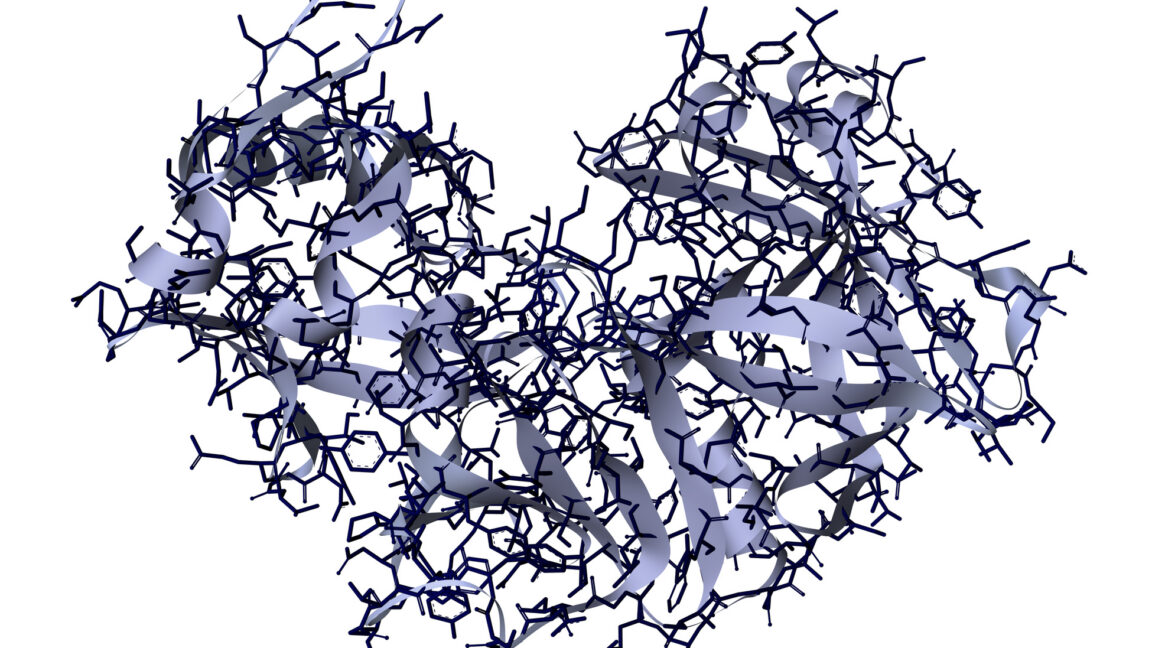
- Primary Wire Report: A protein is a chain of amino acids held together by what are called peptide bonds. On their own, those bonds are extremely stable; they're estimated to have a...
- Desk & Verification: Normalized under Technology desk via Ars Technica.
- Classification Status: DEVELOPING wire dispatches verified against institutional sources.
John Timmer
ContributorContributing Reporter via Ars Technica
This article has been aggregated and formatted under Chronicle Global's editorial standards. Primary source reporting is attributed to originating news services and verified against public records.
Direct primary wire transmission originated by Ars Technica.
Source Transparency & Verification Dossier
Format: DEVELOPING
Retrieved / Published: Oct 14, 2026, 05:10 PM UTC
Content normalized through Chronicle Ingestion Engine.
Editorial StandardsThe Chronicle Morning Intelligence Briefing
Join 18,500+ global policy analysts, diplomats, and tech researchers. High-signal empirical dispatches delivered daily at 06:00 UTC.
Related Coverage & Developing Updates

Things are finally looking up for NASA's first missions to Venus in a generation
Most planetary scientists will tell you the heyday of Venus exploration was more than a generation ago. That is about to change. Two NASA missions are on track...

Schools across US protest FCC plan that could disconnect kids from Internet
Schools and libraries from around the US pleaded with the Federal Communications Commission to drop the idea of ending E-Rate, a $2 billion-a-year program that...
Georgia man sues Flock, sheriff's office over alleged ALPR-fueled retaliation
A small-business owner in Georgia has sued Flock and the Coweta County Sheriff’s Office over alleged retaliation using license plate cameras. “[The lawsuit] all...