Despite the expansion of Starlink and other communications satellite services, most of the world’s Internet traffic still travels through subsea cables crisscrossing the ocean floors. Those fiber-optic cables coexist with a network of oil and gas pipelines and submarine power cables—and all these crucial links connecting countries and continents now face growing sabotage risks as gray-zone warfare and open conflicts have become widespread. The rising risks to the world’s invisible infrastructure beneath the waves are the main subject of a new book by Elisabeth Braw , a senior fellow at the Atlantic Council who leads the Threats to the Global Maritime Order Initiative . Her book, titled Undersea War , explores the modern rise in suspicious incidents in which ships dragging their anchors for unusually long periods have cut or damaged undersea cables and pipelines from the Baltic Sea to the Pacific Ocean. Braw acknowledges that about 60 percent of undersea cable damage is primarily due to human error during fishing and shipping activities, when weighted nets or anchors drag across the seabed. Natural hazards such as storms and undersea landslides also account for a smaller proportion of such incidents. In total, between 150 and 200 cables are damaged each year and usually repaired quickly. Read full article Comments
The Internet’s undersea backbone is slipping into the danger zone
Despite the expansion of Starlink and other communications satellite services, most of the world’s Internet traffic still travels through subsea cables crisscro...
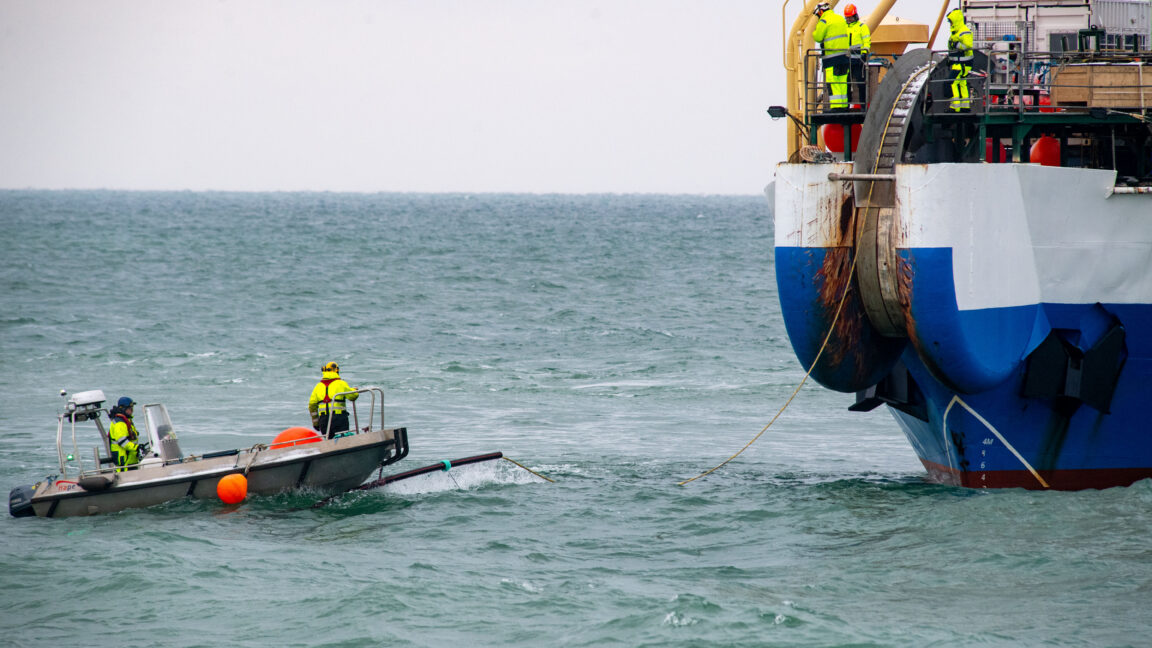
- Primary Wire Report: Despite the expansion of Starlink and other communications satellite services, most of the world’s Internet traffic still travels through subsea cables crisscro...
- Desk & Verification: Normalized under Technology desk via Ars Technica.
- Classification Status: DEVELOPING wire dispatches verified against institutional sources.
Jeremy Hsu
ContributorContributing Reporter via Ars Technica
This article has been aggregated and formatted under Chronicle Global's editorial standards. Primary source reporting is attributed to originating news services and verified against public records.
Direct primary wire transmission originated by Ars Technica.
Source Transparency & Verification Dossier
Format: DEVELOPING
Retrieved / Published: Oct 14, 2026, 11:15 AM UTC
Content normalized through Chronicle Ingestion Engine.
Editorial StandardsThe Chronicle Morning Intelligence Briefing
Join 18,500+ global policy analysts, diplomats, and tech researchers. High-signal empirical dispatches delivered daily at 06:00 UTC.
Related Coverage & Developing Updates

Anthropic warns small AI models could self-replicate through IoT devices
AI company Anthropic is warning that advances in small AI models could soon usher in a new era of self-replicating malware that’s capable of infecting smart fri...

OpenAI, Google pushing new AI models easily tricked into making nudes, researchers say
Safety researchers continue to warn that a large volume of AI-generated explicit content is spreading unchecked, while regulators do little to meaningfully stop...

Martin Shkreli livestreamed himself violating lifetime pharma ban, FTC says
Martin Shkreli—the ex-pharmaceutical executive infamous for illegally hiking the price of a lifesaving anti-parasitic drug by more than 4,000 percent and gettin...