In the Grand Canyon, there is a line in the rock where time seems to have gone missing. Ancient crystalline rocks mark its bottom, while sandstones laid down as life started to diversify during the Cambrian explosion mark the top. “It’s called the Great Unconformity, and it’s a gap in the geologic record,” says Nicolas Flament, a geoscientist at the University of Wollongong, Australia. "This gap can be anywhere between 200 million years, which is not that impressive, to more than a billion years.” In a recent Nature study, Flament and his colleague Santosh Dhungana argue that this gap was carved with help from deep within the planet. According to their models, slow currents of hot rock in Earth's mantle pushed entire continents up for hundreds of millions of years, letting glaciers grind them down and then let them sink, allowing fresh sediments to bury the scar. The largest hole in the rock record might be a fingerprint of processes happening deep in the planet's interior. Ice and sea The oldest sediments resting on the Great Unconformity in North America are between 635 and 482 million years old. Geologists have traced it across most of North America and parts of northern Europe and northern China. “Something seems to have happened, in particular in North America,” Flament says.
Earth's churning mantle may have created the Great Unconformity
In the Grand Canyon, there is a line in the rock where time seems to have gone missing.
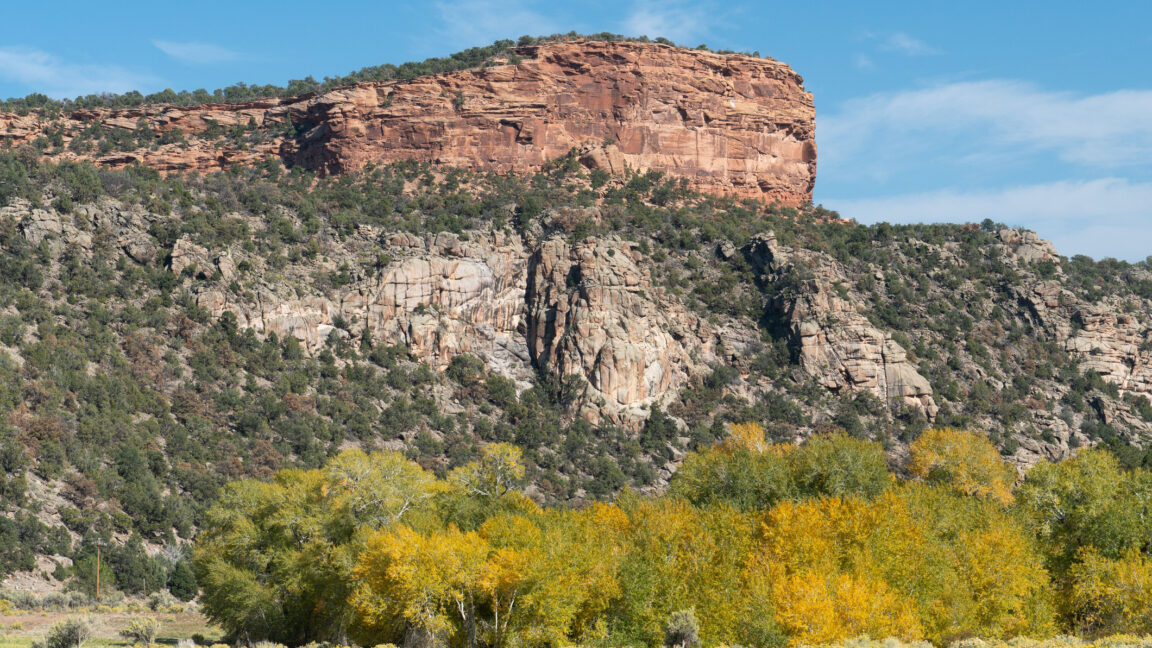
- Primary Wire Report: In the Grand Canyon, there is a line in the rock where time seems to have gone missing.
- Desk & Verification: Normalized under Science & Discovery desk via Ars Technica.
- Classification Status: DEVELOPING wire dispatches verified against institutional sources.
Jacek Krywko
ContributorContributing Reporter via Ars Technica
This article has been aggregated and formatted under Chronicle Global's editorial standards. Primary source reporting is attributed to originating news services and verified against public records.
Direct primary wire transmission originated by Ars Technica.
Source Transparency & Verification Dossier
Format: DEVELOPING
Retrieved / Published: Nov 6, 2026, 08:24 PM UTC
Content normalized through Chronicle Ingestion Engine.
Editorial StandardsThe Chronicle Morning Intelligence Briefing
Independent global intelligence and primary wire coverage. High-signal empirical dispatches delivered daily at 06:00 UTC.
Related Coverage & Developing Updates

Different text genres help doctoral students adapt their writing to reach new readers
An academic abstract, a blog post and a public outreach article all place different demands on the writer.

The introduction of a medieval public health system exposed the population to roundworm
Medieval health and sanitation efforts involved deliberate interventions; however, some of these measures had the opposite effect, leading to an increased...
The migration that transformed Africa's languages, genes, and cultures
It’s not easy to extract iron from its ore.