No organization in the world operates more robots than Amazon. The company already has more than 1 million robots working in warehouses around the clock to make tens of millions of same-day and one-day package deliveries happen on a daily basis—and Amazon is poised to significantly grow that robotic fleet in the coming years as it establishes new factories to churn out increasingly more capable robot workers. Despite deploying so many robots, Amazon is also the second-largest corporate employer in the world, with more than 1.5 million full-time and part-time human workers, according to its 2025 annual report . Amazon executives say that the growing robot fleet has eased the burden on its human workforce by taking on the toughest fulfillment center tasks that carry the greatest risks of physical fatigue and injury. But labor advocacy groups and independent researchers point to evidence suggesting that warehouse automation driven by AI is not all upside for the humans who work alongside robots. “For the last 100 years, most of the automation that we've seen usually happens away from workers—you're taking that high-risk task away from the worker, and you're doing so in a way that is not physically proximate,” Brian Greenwood , professor of business at George Mason University, told Ars. “The rise of collaborative robots really changes that dynamic for two reasons: one is that it is physically proximate, and two, the robot has the ability to dictate the pace of work.” Read full article Comments The global technology and hardware manufacturing sector is navigating rapid infrastructural transformation, characterized by fabrication node transitions, supply-chain reconfigurations, and intensifying competition over next-generation computing standards.
Inside Amazon’s robotic arms race and what it means for the future of human work
No organization in the world operates more robots than Amazon. The company already has more than 1 million robots working in warehouses around the clock to make...
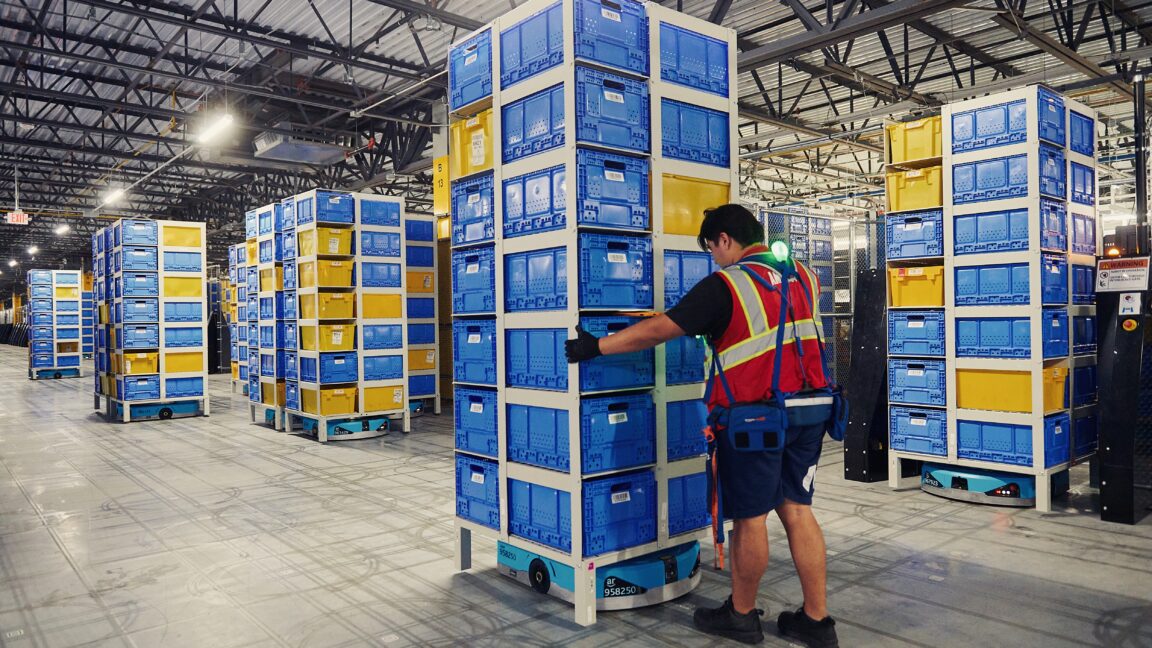
- Primary Wire Report: No organization in the world operates more robots than Amazon. The company already has more than 1 million robots working in warehouses around the clock to make...
- Desk & Verification: Normalized under Technology desk via Ars Technica.
- Classification Status: CONFIRMED wire dispatches verified against institutional sources.
Jeremy Hsu
ContributorContributing Reporter via Ars Technica
This article has been aggregated and formatted under Chronicle Global's editorial standards. Primary source reporting is attributed to originating news services and verified against public records.
Direct primary wire transmission originated by Ars Technica.
Source Transparency & Verification Dossier
Format: CONFIRMED
Retrieved / Published: Oct 12, 2026, 12:43 PM UTC
Content normalized through Chronicle Ingestion Engine.
Editorial StandardsThe Chronicle Morning Intelligence Briefing
Join 18,500+ global policy analysts, diplomats, and tech researchers. High-signal empirical dispatches delivered daily at 06:00 UTC.
Related Coverage & Developing Updates

High-speed video reveals how honey bee stingers pump venom
Credit: Ramirez-Esquivel et al 202 Credit: Ramirez-Esquivel et al 202 Honey bees are known to leave their stingers embedded in tender flesh once they sting you...

Just 5 years in, interactive chatbot platform Character.AI files for bankruptcy
The startup will sell some of its assets to Disney for $20 million....

Phase Eight and Hobbs owner hit by cyber-attack, as H&M probes separate hack claim
TFG London has apologised to customers for disruption after it identified a "cybersecurity incident" on Sunday....